1 The foolish avoid the thought of death,
it seems to them that they will escape it if they do not think about it. The sages of ancient and more recent times considered death to be their best friend.
What is death? The end of the life of every earthly being. When the body is no longer fit to be animated, the human being dies; the soul, however, does not perish, for it has an existence that can and will continue even without the body. The body, deprived of life, is subject to the same laws as soulless nature.
The soul enters another new world, for which it had no understanding as long as, while in the body, it was attached to sensual perceptions. This other world, which appears to the soul at the moment of death, is to it what a variegated play of colours is to a person who has been blind since birth, when he suddenly becomes able to see.
St Sylvester, looking at the corpse, said: “What I am, you were; what you are, I will be”.
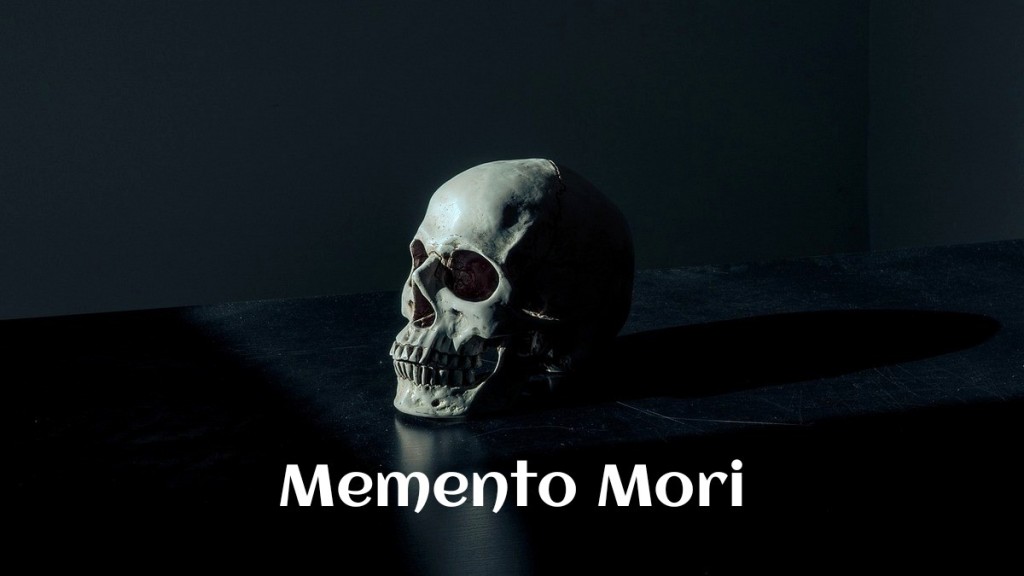
Death is due to the nature of man, yet the separation of soul and body is terrible and bitter. God wanted to give man the supernatural gift of immortality and as to the body, but through sin this gift was lost, nature took over and we, even while living, are already in the grip of death. Life is a constant struggle with death; every watch is a kind of Memento mori that man constantly carries with him.
Death is the end of sensual life. Everything has passed away! The whole of this vast world with all its beauties and comforts, with all its miseries and sufferings, with all its affairs and amusements, with all its relations: all is lost to the deceased! He has left this world. Others have taken his place and will soon forget him. And whether they praise or reprimand him on earth, what good will it do him? What harm will it do him? He is elsewhere.
Death is the end of rehearsal, effort and work. When the drama has caught up to the end, the actor takes off his costume. The outcome of the play – gain, or loss – unchanging forever.
What a man was before God during his lifetime, that he will remain forever.
Death is the end of all illusions. As long as we revel on earth, the mountains and seas seem great to us, and the fixed stars in the sky seem small. This is where the dangerous illusion lies, that these earthly things seem so important to us and the heavenly things so small. Death dissipates this illusion.
- Death is the beginning of eternity,
an introduction to the afterlife, to a world so alien, so extraordinary! People usually dream all their lives; death-is the awakening from this dream.
Death is the beginning of an eternal, unchanging fate for which man has prepared himself here on earth. At the moment of death, no attempt is for naught; once you have flipped your card, you have lost forever.
Conscientious people fall asleep at death like children who, having run around tired, fall asleep in their mother’s arms.
The death of an unconscientious person is like the extinguishing of a vicious fire in the mud. Beyond him he has a miserable life, in front of him a dark eternity, above him a vindictive omnipotence, beneath him the abyss of doom, within him he bears the sentence, that sentence which, during his life, at every evil deed, was heard by the voice of conscience.
Earth is the waiting room before the journey to the afterlife. Take care that you get on the good train.
According to God’s intention, death wounds to heal; nullifies to perpetuate.
The earthly struggle is night, death is the aurora borealis, and the grave is illuminated by the sun of immortality.
Death is certain. Many very people think and live as if they will never die; but this does not change the truth. There is no room for ‘maybe’.
You will die and die once only; you will die quickly. Everything reminds us that life is like an inn where you enter, look at the corners and leave.
It is certain that you must leave everything; that your soul at the moment of death will be either in a state of grace or in a state of disfavour. Certain is judgment, certain justice and certain eternity.
Yet there is something uncertain about death. “It is uncertain where death waits for you”, exhorts the old Seneca, “therefore you wait for it everywhere”. You do not know when, where or how you will die; whether suddenly or after long tormenting sufferings.
3 And what use is the thought of death?
- It protects us from the most dangerous mistakes.
We live so lightly here, as if the interests of this life were everything to us, or at least as if they were the most important thing.
Dying well is the most important thing, that is what death tells you.
Think, however, that whoever wants to live forever must at the same time learn to die well.
Every important step should be well thought out, and so should the step to eternity. We so easily come to disregard sin and the voice of conscience.
Yet in sin lies the germ of an evil death. Remember your last things, man, and you will never sin.
We care so little about rising from our sins, as if we were to live for a very long time yet, or as if we were sure we would still have time for it later.
Death comes like a thief in the night. – And even though we live long, what then? The longer one lives, the more the unquenched spark of passion burns around, the deeper the boil sinks into the soul.
The thought of death teaches us how we should best arrange our lives. What good is a road if it does not lead us to the right gate? Live always as one who must surely die and may die soon, and you will live well.
Not only abuse but also disuse of life will weigh heavily on the soul of the dying. If you want to use life well, accept each day joyfully as the first and undeserved gift. Then try to use it as if it were given to you for the last time, as if your life were ending with it.
- If you want to be wise, think often of your death!
Do not forget in all your pursuits that every step in your earthly life is for you a step to the grave.
One pious man had a tombstone erected with this inscription: Wishing to find life in death, he lived as one who must die. (Ut moriens viveret, vixit ut moriturus).
Such should also be our desire.
This is the best philosophy that prepares us for a good death.
——–
O. Tilmann Pesch SI – A Christian Philosophy of Life. T. I. Cracow 1930, pp. 259-263.

 Catholic during the Great Apostasy
Leave a comment